Book Titles Open Access Full access
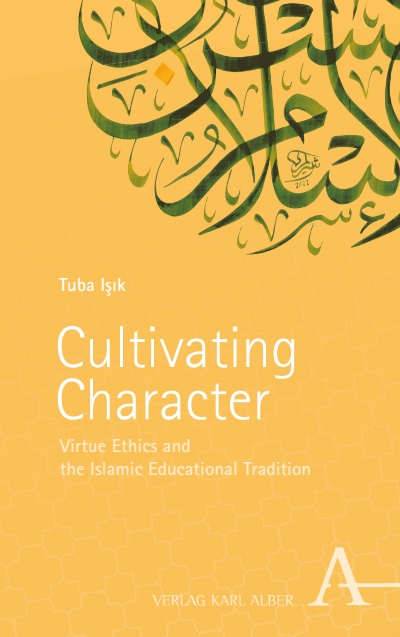
Cultivating Character
Virtue Ethics and the Islamic Educational Tradition- Authors:
- Publisher:
- 2025
Summary
This book places theological, educational, philosophical and mystical insights from an Islamic perspective at the service of the cultivation of the self. Against this background, it analyses the question of to what extent the work on the self in terms of virtue ethics can be considered a task of school education. It thus focuses on virtue as a dimension of education, including Islamic religious education. At the beginning of the book, theoretical considerations about the moral constitution of human beings are central. These are then concretised into the practical categories or key virtues of justice, sincerity, compassion and friendship.
Keywords
Search publication
Bibliographic data
- Copyright year
- 2025
- ISBN-Print
- 978-3-495-99151-0
- ISBN-Online
- 978-3-495-99152-7
- Publisher
- Karl Alber, Baden-Baden
- Language
- English
- Pages
- 274
- Product type
- Book Titles
Table of contents
ChapterPages
- Introduction
- 1. In Search of the Cultivation of the Self
- 2. Work on the Self with Ethical Virtues: A Component of the Educational Mission of Schools
- 3.1 Approaches to Values Education
- 3.2 Ethical Formation
- 3.3 Recognition Pedagogy
- 3.4 Intercultural Pedagogy
- 3.5 Virtue Competence? The Consequences of Virtue Ethics: Considerations for the Discourse on Competencies in Educational Theory
- 3.6 Summary
- 1.1 Philosophical Revival of Aristotelian Virtue Ethics in the Present Day
- 1.2 Virtue: An Ambivalent Word in Germany
- 2. Virtue Ethics as a Reference Point for a Common Life
- A Brief Excursus: Aristotle’s Concept of the Soul
- 3.2 The Deliberation Process as a Condition of Self-knowledge
- 3.3 Prospering for a Successful Life
- 3.4 Emotions as Relevant Dispositions of Moral Excellence
- 3.5 The Cultivation of Character
- 1. Adab and akhlāq: Two Categories of Ethical Educational Endeavours
- 2.1 Types of Adab Literature
- 2.2 Ibn Abī ’l-Dunyā (823–894)
- 2.3 Kitāb Makārim al-Akhlāq
- 2.4 Narrative Constructions of a Vision of the Virtuous
- 2.5 The Significance of Ethical, Religious Adab Literature for Contemporary Educational Thinking
- 3.1 Akhlāq as a Connotative Concept of the Islamic Ethnoleader
- 3.2 Phase of the Translation of Ancient Philosophical Writings
- 3.3.1 Abū Naṣr Muḥammad al-Fārābī (c. 872–950)
- 3.3.2 Abū ʿAlī Miskawayh (932–1030)
- 3.3.3 Al-Rāghib al-Iṣfahānī (d. 1108)
- 3.3.4 Abū Ḥāmid Muḥammad al-Ghazālī (c. 1055–1111)
- 3.3.5 Naṣīr al-Dīn al-Ṭūsī (1201–1274)
- 3.4 Brief Summary
- 4.1 Tazkiyya al-nafs: Physical Practices as Ethical Virtue Practice
- 4.2 A Brief Outlook
- 5. Summarising Reflections on the Cultivation of the Self
- 1. Society, Virtue, and Competence
- 2.1 Justice
- Excursus: Respect as an Important Secondary Virtue
- 2.3 Compassion
- 2.4 Friendship
- 3. Reflections on the Educational Discourse within the Horizon of Virtue Ethics
- 4. Insights for a Contemporary Islamic Religious Education in Germany
- AbbreviationsPages 231 - 232 Download chapter (PDF)
- SourcesPages 233 - 274 Download chapter (PDF)